Online security tools often get grouped together, but VPNs and antivirus software solve very different problems. Many users assume a VPN can block malware or that antivirus software can protect browsing privacy. In reality, each tool handles a separate layer of digital security.
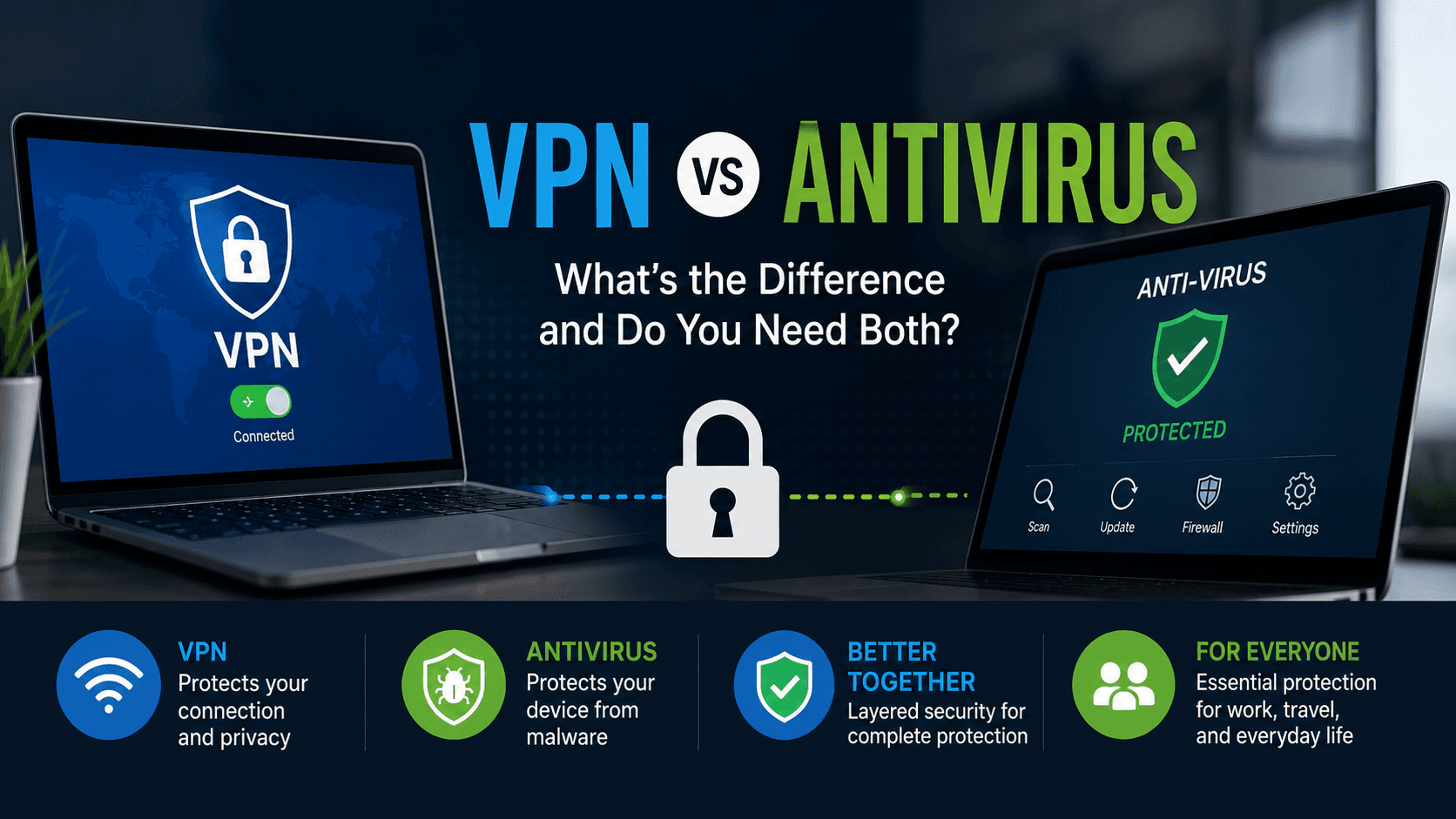
A VPN focuses on protecting your internet connection and online privacy. Antivirus software focuses on detecting and removing malicious software from your device. Using only one leaves gaps that cybercriminals can still exploit.
Understanding the difference helps users build a more complete defense against modern online threats.
What a VPN Actually Does
A VPN, or Virtual Private Network, encrypts your internet traffic and routes it through a secure server. This process makes it harder for internet service providers, advertisers, hackers, or public network operators to monitor your online activity.
VPNs are commonly used for:
- Securing public Wi‑Fi connections
- Protecting browsing privacy
- Hiding your IP address
- Reducing tracking from websites and advertisers
- Securing remote work connections
- Protecting sensitive online activities
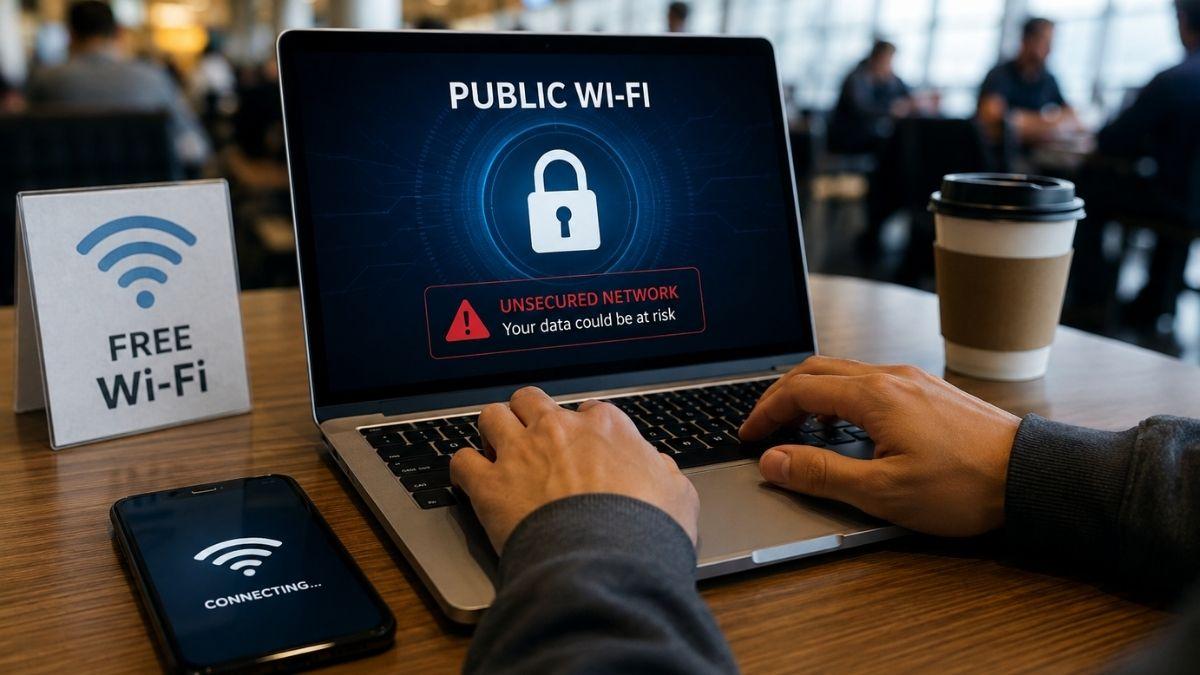
VPNs are especially useful while traveling or working remotely. Public networks in airports, hotels, and cafés are often less secure, making encrypted connections more important.
What a VPN Cannot Protect Against
Despite the privacy benefits, a VPN is not a complete cybersecurity solution.
A VPN generally cannot:
- Remove viruses from a device
- Detect malware infections
- Scan downloaded files
- Stop ransomware attacks
- Block phishing emails
- Prevent malicious software from running
If malware already exists on your device, a VPN will not remove it.
What Antivirus Software Does
Antivirus software protects devices against malicious programs and suspicious activity. Instead of securing internet traffic, antivirus tools focus on identifying threats directly on the device.
Modern antivirus software can:
- Detect malware infections
- Remove viruses and spyware
- Block ransomware attacks
- Scan downloads and email attachments
- Warn users about dangerous websites
- Monitor suspicious behavior in real time
Many antivirus suites now include additional security features such as firewall controls, password protection tools, and phishing detection.
What Antivirus Software Cannot Do
Antivirus software also has limitations.
Most antivirus tools cannot:
- Encrypt your internet traffic
- Hide your IP address
- Prevent ISP tracking
- Protect browsing privacy directly
- Secure public Wi‑Fi traffic on their own
Without a VPN or another encryption tool, your browsing activity may still remain visible to networks, advertisers, or attackers monitoring traffic.
VPN vs Antivirus: The Main Differences
Although both tools improve cybersecurity, they protect different areas.
| Feature | VPN | Antivirus |
|---|---|---|
| Encrypts internet traffic | Yes | No |
| Hides IP address | Yes | No |
| Protects browsing privacy | Yes | Limited |
| Detects malware | No | Yes |
| Removes viruses | No | Yes |
| Blocks ransomware | No | Yes |
| Protects public Wi‑Fi traffic | Yes | Limited |
| Scans files and downloads | No | Yes |
The comparison makes one thing clear: VPNs and antivirus software are not replacements for each other.
Why Using Both Makes More Sense
Using both tools creates stronger overall protection because each covers a different security layer.
A VPN protects your connection while antivirus software protects the device itself.
A VPN helps secure:
- Online banking sessions
- Public Wi‑Fi browsing
- Remote work access
- Sensitive account logins
- General browsing privacy
Antivirus software helps stop:
- Malware infections
- Dangerous downloads
- Ransomware attacks
- Phishing-related threats
- Suspicious software activity
Together, they reduce exposure to many common online risks.
Common Misunderstandings About VPNs and Antivirus Tools
Many users misunderstand what these tools can realistically do.
“A VPN makes me completely anonymous.”
A VPN improves privacy, but websites can still track users through cookies, browser fingerprinting, and account logins. True anonymity requires additional privacy practices.
“Antivirus software protects my privacy.”
Antivirus tools focus on malware protection rather than encrypted browsing or online privacy. Privacy protection requires separate tools like a VPN.
“Only tech professionals need cybersecurity tools.”
Cybercriminals often target everyday users because personal devices contain valuable information such as:
- Passwords and login credentials
- Banking information
- Personal photos and videos
- Emails and documents
- Saved payment details
Basic cybersecurity protection matters for anyone who uses the internet regularly.
When You Should Prioritize a VPN
A VPN becomes especially important if you:
- Frequently use public Wi‑Fi
- Travel internationally
- Work remotely
- Access financial accounts online
- Want stronger browsing privacy
VPN services are now widely available across laptops, smartphones, tablets, and even routers.
When Antivirus Software Is Essential
Antivirus software should be considered necessary if you:
- Download files regularly
- Open email attachments often
- Install software from multiple sources
- Store sensitive information on your devices
- Want protection against ransomware and malware
Modern threats continue evolving, making real-time threat monitoring increasingly important.
Better Security Starts With Layered Protection
VPNs and antivirus software work best together rather than separately. One protects your internet connection and privacy, while the other protects your device from malicious software.
As online threats become more advanced, relying on a single security tool is rarely enough. Combining encrypted browsing with malware protection creates a more balanced approach to digital safety.
Both tools are widely available today, making it easier for users to strengthen their online security without complicated setups